




Cat owners all share a common frustration: the market is flooded with endless varieties of cat litter, making it difficult to choose the best cat litter for their needs. With prices ranging from a few dollars to premium options, many people struggle with how to choose cat litter that actually delivers good performance. The marketing jargon is even more overwhelming—“imported raw materials,” “long-lasting odor control,” “non-stick and dust-free”—leaving novice “cat parents” confused and unsure of where to start. Many people follow trends and buy popular or expensive products, hoping to find the best cat litter, only to discover issues such as poor cat litter odor control, excessive dust, or weak clumping.
This guide will help you find the best cat litter based on safety, performance, and real-world testing.
As cat litter sellers who have been deeply rooted in the pet supply industry for many years, we receive daily consultations from owners and have witnessed too many people fall into “traps” because they don’t know how to choose. Today, in collaboration with our partner manufacturing facilities, we are revealing the logic behind selecting high-quality cat litter from a scientific and educational perspective. No flashy slogans—just years of production R&D experience, actual test data, and practical tips summarized from thousands of cat owners. Our goal is to help you bypass all the gimmicks and precisely select a high-quality litter that keeps your cat safe and gives you peace of mind, ensuring the cat’s area remains clean and fresh.
What Makes the Best Cat Litter?
Let’s start with a sincere truth: choosing cat litter is never a case of “the more expensive, the better,” nor is a trending brand necessarily the right fit. Our R&D team repeatedly emphasizes that the core of high-quality cat litter is to “align with a cat’s physiological habits while balancing practicality and safety.” Most flashy marketing features are merely gimmicks for the brand’s benefit and are meaningless—or even potentially harmful—to the cat.
According to data from joint testing conducted by cat litter companies and consumer councils across four regions, nearly 60% of cat litters currently on the market suffer from issues like excessive dust, loose clumping, and poor odor control. These issues are the core reasons why cats refuse to use the litter box and why odors linger in the home. Even more distressing is that some low-quality litters contain harmful ingredients, and long-term use can damage a cat’s respiratory and gastrointestinal health.
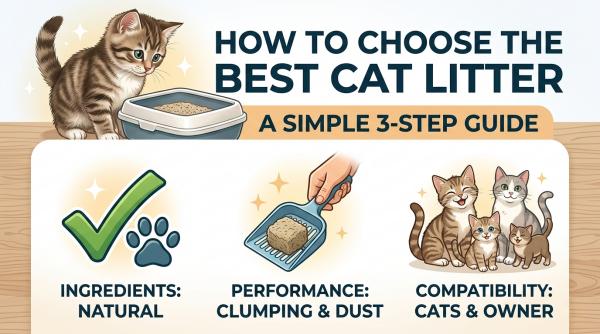
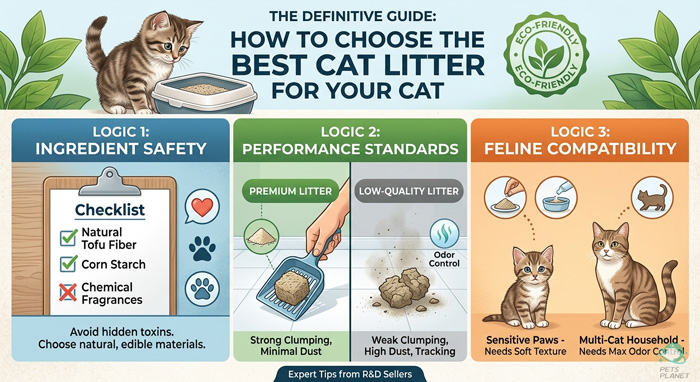
The logic for picking high-quality litter is actually quite simple. Manufacturers follow three core principles when producing any qualified litter, which also serve as our selection criteria: Ingredient Safety, Performance Standards, and Feline Compatibility. Today, we will break down these three logics step-by-step, combined with production testing details, to teach you how to choose like a pro, even if you are a first-time owner.
Logic 1: Safe raw materials are the bottom line.
Manufacturer’s Test: Only No-Additives Offer True Peace of Mind
Safe raw materials are the foundation of choosing a safe cat litter, especially when looking for a reliable natural cat litter for long-term use.
Cat litter is an item your cat interacts with every day. When they use the box, they dig with their paws, making it inevitable that litter sticks to their paw pads or is even ingested in small amounts during grooming. Therefore, ingredient safety is the absolute bottom line and the step manufacturers prioritize most.
Many new owners don’t realize that legitimate manufacturers have strict standards for screening raw materials. Each batch undergoes rigorous inspection; any material that fails to meet standards is never used. According to manufacturing specifications, high-quality ingredients must meet three conditions: Natural, Non-toxic/No Harmful Additives, and Mold-free.
High-quality materials generally fall into two categories:
- Natural Plant-Based Materials: These include soybean fiber, corn starch, and cassava starch. These are safe and non-toxic; even if a cat accidentally eats a small amount, it can be passed through the digestive tract without harm.
- Natural Mineral Materials: These are primarily high-purity bentonite. After purification and de-dusting, the texture is fine, cat acceptance is high, and water absorption is excellent.
Test data shows that high-quality litter must comply with standards such as GB/T 43839-2024 (Safety Technical Requirements for Companion Animal Pet Supplies), where heavy metals like arsenic and lead, as well as formaldehyde content, must be controlled within safe limits. We once encountered a low-quality litter made from recycled waste that used industrial glue and bleach; tests showed its formaldehyde content was three times the limit. Long-term use of such litter would not only irritate a cat’s respiratory tract but could also lead to skin allergies and gastrointestinal distress.
How can a novice judge if the ingredients are safe? Here are two simple tips based on factory testing methods:
- Check the Ingredient List: Legitimate packaging will clearly label ingredients like “soybean fiber, corn starch” or “high-purity natural bentonite.” It won’t use vague terms like “composite materials” or “other ingredients,” and it certainly won’t include “industrial glue,” “preservatives,” or “artificial fragrances.” If the list is vague or missing, avoid it.
- The Smell Test: Quality litter should only have the faint natural scent of its ingredients—the bean aroma of tofu litter, the pine scent of wood litter, or the natural earthy scent of bentonite. There should be no pungent chemical or artificial perfume smell. If you open the bag and smell an overwhelming fragrance or a sharp chemical odor, it’s likely masking poor ingredients.
Logic 2: Performance Standards are the Core.
Manufacturers Break Down 3 Key Indicators
If safety is the bottom line, performance is the core functionality. A litter’s job is to absorb urine, encapsulate feces, and reduce odor. This depends on: Low Dust, Strong Absorption, and Easy Clumping.
Indicator 1: Low Dust — Protecting the Respiratory Tract
Dust is the “hidden killer” in many products. Choosing a low dust cat litter or even a dust free cat litter is essential for protecting your cat’s respiratory health.
A cat’s sense of smell is 40 times more sensitive than a human’s, and their respiratory system is fragile. Invisible fine dust can enter the nasal cavity and lungs, causing chronic rhinitis, bronchitis, or asthma over time—especially in kittens, seniors, or sensitive cats.
Factory Standards: High-quality litter must have a dust content below 0.20% and a friability (dusting) rate of ≤1.20%.
- The Bottle Test: Fill a clear plastic bottle halfway with litter, shake vigorously for 10 seconds, then let it sit for 30 seconds. If the bottle walls are covered in thick dust, pass on it.
- The Hand Test: Rub a handful of litter in your palm for 30 seconds. If your palm is covered in gray dust or feels “muddy,” the dust level is excessive.
Indicator 2: Strong Absorption — Fast Locking and Anti-sticking
Absorption determines cleaning difficulty and odor. If it’s slow, urine stays on the surface, sticking to paws and tracking through the house. If it’s incomplete, urine seeps to the bottom, forming a “cement-like” residue that is hard to scrape and breeds bacteria.
Factory Standards: Absorption rate should be ≥90.0%, locking liquid within 3-5 seconds, with a capacity 3-5 times its own weight.
- The DIY Test: Pour 10ml of water into a small container of litter. If it’s absorbed in 5 seconds without liquid reaching the bottom, it’s qualified.
Indicator 3: Easy Clumping — Firm and Non-breaking
Easy clumping is a key feature of a high-quality clumping cat litter, especially if you are looking for the best clumping cat litter for daily cleaning.Quality litter forms a tight clump that doesn’t break when scooped, preventing the contamination of clean litter and reducing cleaning work.
Factory Standards: Tofu litter clumping strength should be ≥75.0%, while hybrid or bentonite litters often reach 90%+. If it shatters when touched by a scoop, it will cause odors to spread and make the box messy.
When comparing different types of cat litter, such as bentonite, tofu, and mixed formulas, the best cat litter is the one that balances low dust, strong clumping, and effective odor control.
Logic 3: Feline Compatibility is the Key.
The Manufacturer’s Perspective: The Best Choice is the One that Suits the Cat
Many novice owners fall into a trap: they assume that as long as the litter has safe ingredients and meets performance standards, it must be suitable for their cat. This isn’t always true. Choosing the right litter also requires considering the cat’s age, physical condition, and lifestyle habits. Ultimately, the cat is the end-user; a truly high-quality litter must be one that the cat likes and adapts to—an essential factor cat litter companies consider during R&D.
Data from manufacturer surveys show that cats of different ages and constitutions have varying needs. For example, kittens and senior cats have tender paw pads and sensitive respiratory tracts. They are best suited for low-dust, soft-textured plant-based litters like tofu or cassava litter. These litters feature fine particles that won’t scratch delicate paws or irritate the airways. Moreover, since the ingredients are natural and safe, there is minimal risk even if a kitten accidentally ingests a small amount.
In contrast, adult cats, especially those in multi-cat households, produce a higher volume of waste. They are better suited for bentonite or hybrid (mixed) litters that offer strong absorption and firm clumping. These types of litter can lock in urine and odors rapidly, making the cleaning process much more efficient for the owner.
Furthermore, a cat’s sense of smell is extremely sensitive, and they have distinct preferences regarding scent. Some cats enjoy the faint, natural aroma of plant-based litter, while others prefer the mineral scent of bentonite. Many cats are repelled by litter containing artificial fragrances, which may even lead them to reject the litter box entirely and eliminate elsewhere in the home.
Therefore, beyond safety and performance, you must account for your cat’s preferences. If you are buying litter for the first time, consider purchasing small sample bags of different varieties. Observe your cat’s reaction: if they dig naturally, use the box without hesitation, and don’t obsessively shake their paws afterward, the litter is a good fit. However, if your cat starts sneezing, rubbing their eyes, or avoiding the litter box, it is a sign that the litter is unsuitable and needs to be changed.
The R&D experts at our partner factories emphasize that high-quality litter must align with feline physiology. Only then can it ensure the cat’s comfort, the owner’s convenience, and a clean, fresh environment in the home.
Manufacturer Warning: Never Buy These 3 Types of Cat Litter (No Matter How Cheap)
Based on industry testing experience and long-term observation, we have identified three types of litter you should strictly avoid to protect your cat’s health and save your money:
- Litter with Anonymous Ingredients or No Lab Reports: These are mostly produced in small, unregulated workshops without any quality testing. The raw materials might be recycled waste or moldy substances, often supplemented with harmful chemicals. Long-term use can severely damage a cat’s health and leave your home smelling foul and filled with dust.
- Litter with Excessive Dust or Pungent Odors: This indicates either poor-quality raw materials or a crude manufacturing process. High dust levels irritate the respiratory tract, leading to sneezing and coughing. Pungent smells—usually from artificial perfumes or chemicals—cause feline discomfort and can lead to litter box aversion.
- Litter with Poor Absorption or Loose Clumping: These litters are a nightmare to use. They stick to the bottom of the tray and break apart when scooped. Not only does this waste litter, but it also allows odors to spread rapidly and turns the cat’s area into a mess. Furthermore, these damp, uncollected fragments can easily breed bacteria.
Final Thoughts: Choosing Quality Litter Doesn’t Have to Be Complicated
In reality, the logic for picking premium cat litter has always been straightforward: Ingredient Safety, Performance Standards, and Feline Compatibility. These three pillars are the core principles for manufacturers and the practical expertise we’ve gained as sellers over the years.
Many owners struggle not because the logic is complex, but because they are misled by marketing gimmicks and lose sight of what cat litter actually is. As a daily necessity for cats, its core purpose is to meet their physiological needs, safeguard their health, and reduce the cleaning burden on the owner. This is the original intent of every R&D team and the bottom line we uphold as sellers.
Throughout our years in the industry, we have seen too many cases where the wrong litter caused feline illnesses or owner stress—and just as many cases where switching to the right litter restored a cat’s health and made a home fresh again. We firmly believe that good cat litter doesn’t need flashy ads or a premium price tag. As long as it satisfies the three core principles, it is a high-quality choice worth your trust.
We hope this guide empowers every cat owner to understand the underlying logic of cat litter, bypass the “traps,” and find the perfect match for their pet. May every cat grow up healthy and happy, and may every owner find joy and healing in their companionship, within a home that is always clean, fresh, and full of warmth.
If you are looking for a reliable best cat litter option, choose products that offer low dust, natural ingredients, and strong clumping performance for everyday use. When picking cat litter, don’t follow the crowd or chase high prices. Focus on the materials, the dust, the absorption, and the clumping—and most importantly, observe your cat. This is the most practical and honest logic for choosing the best cat litter.
FAQ
Why is low dust cat litter important?
A cat’s respiratory system is highly sensitive. Low dust or dust-free cat litter helps prevent chronic rhinitis, bronchitis, and asthma in cats. It also keeps your home cleaner and protects the owner’s respiratory health during daily scooping.
Which cat litter has the best odor control?
For superior cat litter odor control, look for products with high absorption rates that lock in moisture within 3-5 seconds. Natural materials like bentonite or high-quality tofu litter with no artificial fragrances are often the most effective.
How can I tell if a cat litter is poor quality?
Avoid cat litters that have excessive dust, pungent chemical smells (used to mask poor materials), or loose clumping. If the litter sticks to the bottom of the tray or shatters when scooped, it likely fails basic performance standards.