



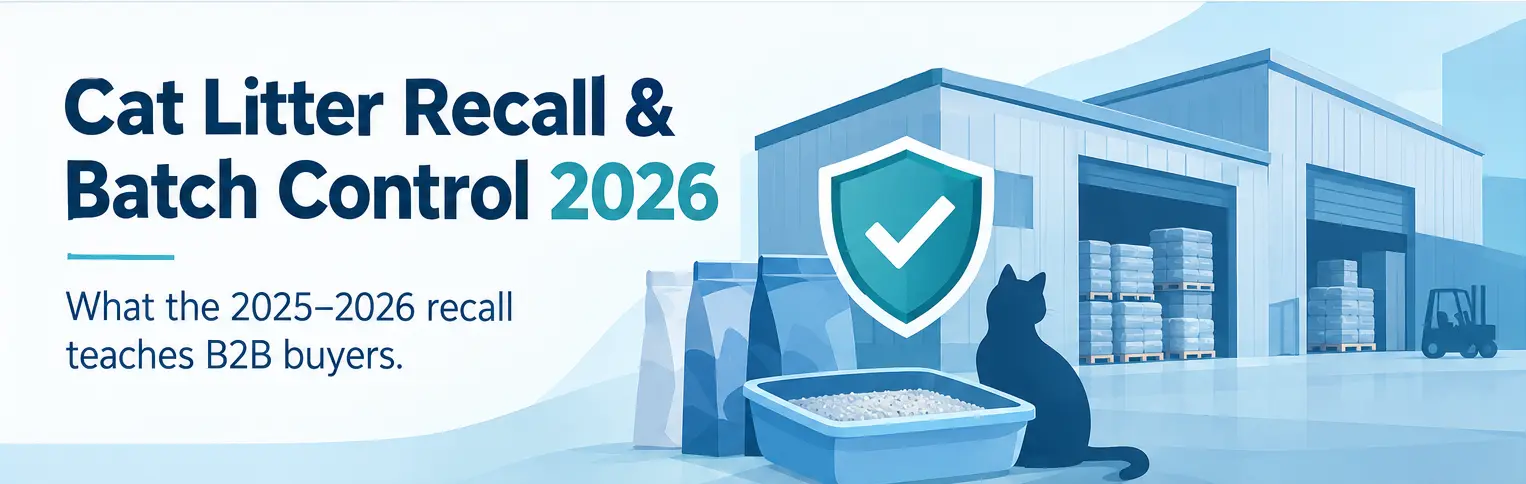
Quick Answer: The 2025–2026 Gold Star Distribution recall involved FDA-regulated products stored at a Minneapolis distribution facility where FDA identified rodent and avian contamination and insanitary conditions. The FDA product list includes three Tidy Cat litter SKUs. For B2B buyers, the case highlights the need to assess warehouse controls, batch traceability, supplier audits, and product-specific quality records alongside manufacturing controls.
A U.S. cat litter recall in late 2025 and early 2026 shows why B2B buyers need to evaluate product safety beyond the manufacturing site. Gold Star Distribution recalled FDA-regulated products held at its Minneapolis facility after FDA identified rodent and avian contamination and insanitary storage conditions; Tidy Cat litter was among the affected products. The event provides a practical case for reviewing warehouse controls, batch traceability, and supplier-audit requirements.
What Happened
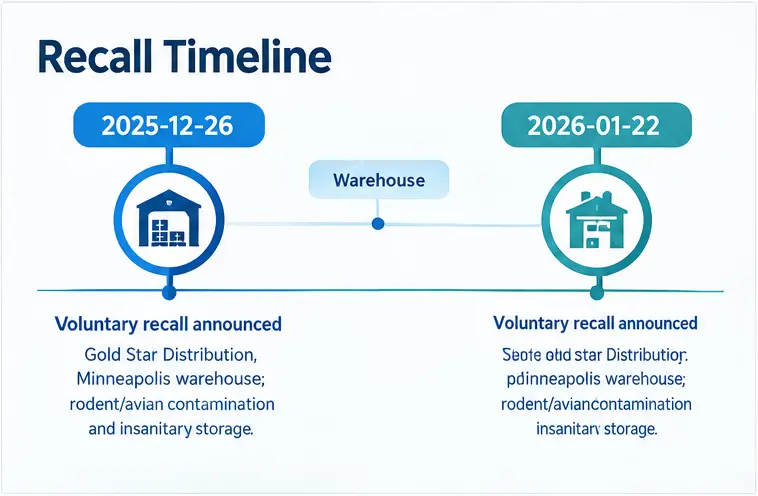
On December 26, 2025, Gold Star Distribution, Inc. announced a voluntary recall of FDA-regulated products held at its Minneapolis, Minnesota facility. FDA reported that the facility was operating under insanitary conditions, including rodent excreta, rodent urine, and bird droppings in areas where products were stored, creating a potential risk of contamination with filth and harmful microorganisms, including Salmonella. The recalled products were distributed through retailers in Minnesota, Indiana, and North Dakota, and the FDA product list includes three Tidy Cat litter SKUs. FDA records subsequently show Class II classifications associated with the Gold Star recall event.
| Event | Date | Detail |
|---|---|---|
| Voluntary recall announced | 2025-12-26 | Gold Star Distribution, Minneapolis warehouse; rodent/avian contamination and insanitary storage |
| Distribution scope | 2025-12-26 | Retailers in Minnesota, Indiana, North Dakota |
| FDA classification | January 2026 | FDA records show Class II classifications associated with the Gold Star recall event |
| Affected Tidy Cat SKUs | 2025-12-26 | Three Tidy Cat litter SKUs listed in the FDA product list |
Source note: Recall dates, contamination findings, distribution information, and affected Tidy Cat SKUs are based primarily on FDA recall materials; secondary reporting is used only for contextual coverage.
The Critical Nuance: Storage Was the Identified Cause
The key B2B lesson is that this was a distributor storage-contamination event rather than a reported manufacturing-process defect. FDA identified insanitary conditions and rodent and avian contamination at the Gold Star facility where the affected products were held. The case shows why supplier qualification should extend beyond the production line to include warehousing, transit, distribution controls, and the ability to trace affected lots through the supply chain.
What Class II Means
An FDA Class II recall is a situation in which use of, or exposure to, a violative product may cause temporary or medically reversible adverse health consequences, or where the probability of serious adverse health consequences is remote. Class I represents a higher health-hazard classification, while Class III applies when adverse health consequences are not likely. For B2B buyers, the classification should be read together with the specific recall reason, affected products, distribution scope, and traceability requirements.
Why This Matters for B2B Buyers
The event is a reminder that import and private-label programs should build quality assurance around the whole supply chain. Supplier audits should cover manufacturing, warehousing, pest control, handling, and distribution practices. Batch records and lot traceability help buyers identify affected lots and limit the scope of a recall, while third-party testing from recognized providers such as SGS or Intertek can provide independent verification of defined product specifications. These controls address different risk points and should be used together rather than as substitutes for one another.
How Pet Horizon Controls Batch Risk
Pet Horizon uses documented quality-control and traceability records as part of its B2B sourcing process, including supplier and facility audit records, SGS verification, applicable SDS documentation, product standards, transport documentation, and production batch records. Buyers evaluating China cat litter quality standards should request the applicable audit reports, test reports, product standards, and batch-traceability records for the specific SKU rather than relying on general supplier credentials.
A Buyer’s Supplier-Audit Checklist
A practical audit for cat litter sourcing covers four areas: manufacturing controls (sanitation, pest management, and process controls), documentation (applicable SDS, product standards, batch records), independent verification (SGS/Intertek or equivalent third-party testing), and warehouse, handling, and distribution controls. For cross-border programs, the cat litter tariff guide and import-compliance steps sit alongside these quality checks, and a bulk cat litter program should specify lot traceability and re-test frequency in the contract.
Risks and Constraints
- Incomplete audits: qualifying only the factory can leave warehouse and distribution controls outside the supplier-risk assessment, as illustrated by the Gold Star storage-contamination event.
- Missing batch records: without reliable lot traceability, a contaminated lot may result in a broader program hold when affected product cannot be clearly isolated.
- Unreliable labs: weak or unverifiable test reports provide false assurance; use recognized third parties.
- Documentation gaps: missing SDS, standards, or batch records complicate both compliance and recall response.
Conclusion
The 2025–2026 Gold Star Distribution recall, which included three Tidy Cat litter SKUs, was linked by FDA to insanitary storage conditions and rodent and avian contamination at the distributor facility. The recall was later classified as Class II. For B2B buyers, the practical lesson is to assess the full supply chain — manufacturing, warehousing, handling, documentation, testing, and traceability — and to require product-specific records that can identify and isolate affected lots when a recall occurs.
Frequently Asked Questions
The recall stemmed from rodent excreta, rodent urine, and bird droppings found in a distributor warehouse, with insanitary storage conditions and microbial contamination risk including potential Salmonella. It was a storage event, not a reported manufacturing defect.
FDA identified the recall issue as contamination associated with insanitary conditions at the Gold Star Distribution storage facility. The FDA product list shows that three Tidy Cat litter SKUs were among the products held at that facility. The public recall information does not describe a manufacturing defect in those Tidy Cat products.
FDA Class II applies when use of, or exposure to, a violative product may cause temporary or medically reversible adverse health consequences, or when the probability of serious adverse health consequences is remote. Class I represents a higher health-hazard classification, while Class III applies when adverse health consequences are not likely.
Gold Star Distribution announced the voluntary recall on December 26, 2025. FDA records subsequently show Class II classifications associated with products covered by the Gold Star recall event.
The recalled products were distributed to retailers in Minnesota, Indiana, and North Dakota.
Manufacturing sanitation controls, documentation (applicable SDS, standards, batch records), independent third-party testing such as SGS or Intertek, and warehouse, handling, and distribution controls. Lot traceability lets a single lot be isolated.
Pet Horizon uses supplier and facility audit records, SGS verification, applicable SDS documentation, product standards, transport documentation, and production batch records as part of its quality and traceability process. Buyers should request the specific records applicable to the SKU and production batch under review.
Without reliable lot traceability, a contaminated lot may result in a broader program hold when affected product cannot be clearly isolated. Batch records help buyers identify the affected lot and support a more targeted recall response.